
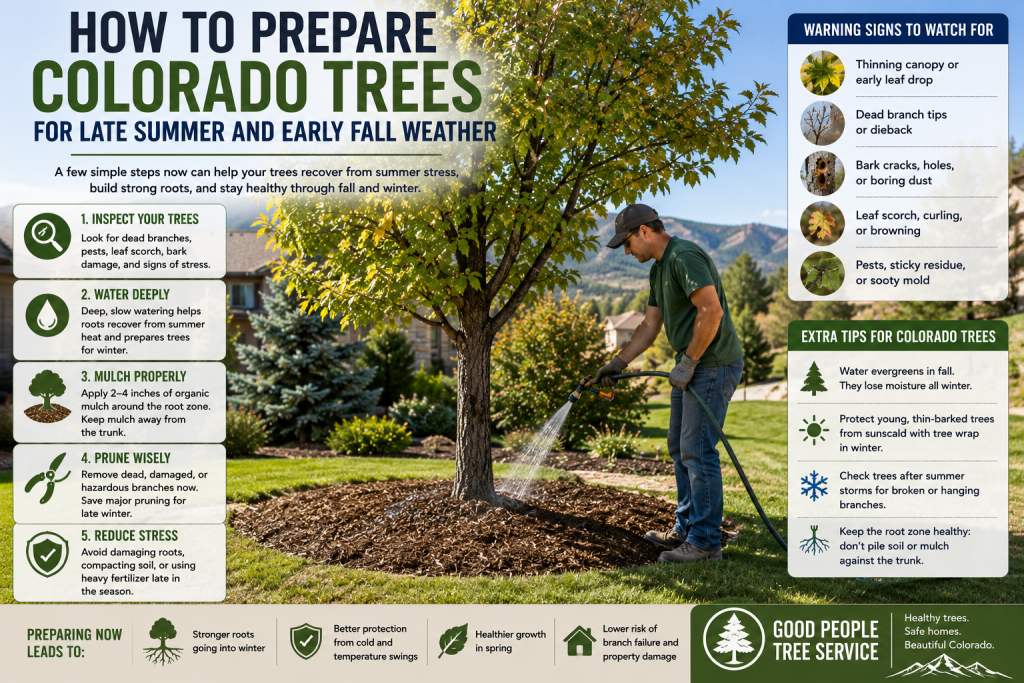
How to prepare Colorado trees for late summer and early fall weather starts before the first cold night. Many homeowners wait until leaves change color, irrigation systems shut off, or snow appears in the forecast. By then, a tree may already carry stress from summer heat, dry soil, pests, broken limbs, poor watering, or compacted roots.
Late summer and early fall create a transition period for Colorado trees. Hot afternoons can continue into September. Nights can cool quickly. Dry weather can linger. Sudden storms can break weakened branches. Early freezes can arrive before trees have fully adjusted. A tree that struggled through July and August may enter fall with less energy, fewer fine roots, and more deadwood than homeowners realize.
Preparing trees during this window helps them recover from summer and enter winter stronger. It also gives homeowners time to check for branch hazards, pest activity, drought stress, trunk damage, root problems, and watering mistakes.
Learning how to prepare Colorado trees for late summer and early fall weather can reduce winter injury, spring dieback, pest pressure, and property risk. It can also help homeowners decide which trees need simple care and which trees need a professional inspection.
If a tree near your home shows leaf scorch, thinning canopy, dead branches, pest activity, or storm damage before fall, Good People Tree Service can inspect it and help you decide what care or removal option makes sense.
How to prepare Colorado trees for late summer and early fall weather
How to prepare Colorado trees for late summer and early fall weather comes down to five priorities: inspect the tree, water deeply, protect the root zone, avoid unnecessary stress, and address hazards before winter storms.
Late summer tree care should not mean random pruning, fertilizer, or overwatering. The goal is to help the tree recover from summer stress and prepare for colder months.
Homeowners should look at the whole site. A tree near rock mulch, pavement, construction, a driveway, or a south-facing wall may need different care than a tree in a wide organic mulch bed. A newly planted tree needs more attention than a mature tree with a broad root system. An evergreen may need fall moisture more urgently than a deciduous tree because it keeps needles through winter.
The best preparation starts with observation.
Start with a late-summer tree inspection
Walk around each important tree before fall. Look from a distance first. Then check the trunk, branches, canopy, and soil from the ground.
Watch for:
- brown leaf edges
- curling or scorched leaves
- early leaf drop
- thinning canopy
- dead branch tips
- broken limbs
- hanging branches
- bark cracks
- mushrooms near the base
- trunk wounds
- boring dust or bark holes
- pitch on conifers
- sticky honeydew
- exposed roots
- soil cracks
- recent construction damage
- new lean
This inspection helps you separate normal seasonal change from stress. A tree with a few yellowing leaves in fall may follow a normal cycle. A tree with dead branch tips, bark damage, dry soil, and sudden thinning needs more attention.
Colorado trees often hide stress until late summer. Heat and drought can reveal root problems that started months or years earlier.
Do not confuse early fall color with healthy dormancy
Early fall color can look beautiful, but it can also signal stress. A tree that changes color much earlier than nearby trees of the same species may be reacting to drought, root damage, pests, disease, compaction, or heat.
A stressed tree may shut down parts of the canopy early to conserve resources. Leaves may yellow, brown, or drop before normal fall timing. Homeowners sometimes assume the tree is “just going dormant,” but the pattern tells the real story.
Compare the tree with similar trees nearby. If one maple, ash, linden, or cottonwood turns early while others stay green, inspect the root zone and canopy more closely.
Early color matters most when it appears with scorch, deadwood, thinning, pests, or dry soil.
Deep watering matters before fall
Colorado’s dry climate makes late-summer and fall watering important. Trees can enter winter with depleted soil moisture after hot weather, low rainfall, and summer irrigation limits.
A tree does not stop needing water just because the calendar moves toward fall. Roots can keep functioning while soil temperatures remain warm enough. If the soil stays dry, the tree may enter winter already stressed.
Deep watering helps moisture reach the active root zone. Lawn sprinklers often do not provide enough water for mature trees. Short irrigation cycles may green up turf while deeper tree roots stay dry.
Water slowly and broadly under the canopy and out toward the dripline. Avoid watering only at the trunk. Most absorbing roots grow away from the base.
Check soil before watering
Do not guess. Check the soil.
Use a screwdriver, soil probe, or small trowel. Test several inches down in multiple locations under the canopy. Dry soil several inches down means the tree may need water. Soggy soil may point to drainage issues, clay problems, or overwatering.
This step matters in Colorado clay soil. Clay can feel hard when dry and heavy when wet. Fast watering may run off instead of soaking in. Overwatering can reduce oxygen around roots.
A soil check protects homeowners from both mistakes. Trees need moisture, but roots also need oxygen.
Water young trees differently from mature trees
Young trees need closer attention in late summer and early fall because they have smaller root systems. Their roots may still sit mostly inside or near the original planting area. Hot weather, wind, and dry soil can stress them quickly.
A newly planted tree may need consistent moisture into fall, especially if it grew in a hot site or rock bed. Letting the root ball dry out can set the tree back before winter.
Mature trees need less frequent watering, but they need a much wider watering area. A slow soak across the root zone helps more than a quick splash near the trunk.
Homeowners should adjust watering based on tree size, soil type, weather, slope, mulch, and recent rainfall.
Prepare evergreens before winter moisture loss
Evergreens deserve special attention. Pines, spruce, firs, and other conifers keep needles through winter. They continue losing moisture through those needles during dry, windy weather.
If an evergreen enters winter dry, it may brown later. Homeowners often notice damage in spring and assume the problem started then. In many cases, winter desiccation began earlier, after a dry fall or during warm, snowless winter stretches.
Late summer and early fall watering can help evergreens build moisture reserves before freezing weather. This matters especially for newly planted evergreens, trees near rock mulch, trees near pavement, and trees exposed to winter wind.
Watch for dull color, thinning needles, tip dieback, pitch, boring dust, or rapid browning. Those signs may point to drought, pests, root issues, or disease.
Use organic mulch before cold weather
Organic mulch helps trees handle both heat and cold. It conserves soil moisture, moderates temperature swings, reduces grass competition, and protects shallow roots.
A good mulch ring also keeps mowers and string trimmers away from the trunk. Those tools can wound bark and create long-term problems.
Use wood chips, bark, pine needles, leaf mulch, or arborist chips where appropriate. Spread mulch in a flat layer instead of piling it into a mound.
Keep mulch away from the trunk. The root flare should stay visible. A mulch volcano can trap moisture against bark, hide decay, and create root problems.
Late summer and early fall offer a good time to refresh thin mulch before winter.
Be careful with rock mulch
Rock mulch can make a landscape look clean, but it can also increase heat around trees during summer. In late summer, that heat can keep soil and roots under extra stress.
Rock beds can also hide dry soil. A tree may look surrounded by a finished landscape while the root zone below lacks moisture. Landscape fabric under rock can complicate water movement and soil health over time.
If a tree in rock mulch shows scorch, thinning, exposed roots, or poor growth, check the soil and consider whether an organic mulch ring around the tree would support root health better.
Rock can work in some xeric areas. Trees usually benefit more from organic mulch around the root zone.
Avoid heavy fertilizer in late summer
Many homeowners want to “boost” a struggling tree before fall. Fertilizer is not always the right answer.
A stressed tree often needs water, root-zone protection, soil improvement, pest diagnosis, or pruning of hazardous deadwood. Fertilizer cannot fix compacted roots, drought damage, trunk wounds, or bark beetle activity.
Late-season fertilizer can also encourage growth that may not harden off before cold weather, depending on timing, species, and product. That growth can become vulnerable during early freezes.
If a tree looks weak, diagnose the cause before adding fertilizer. A professional inspection can help determine whether nutrients, water, roots, pests, or structure matter most.
Remove hazards before snow and wind
Late summer and early fall give homeowners a chance to find hazardous branches before winter storms.
Dead branches become more risky when snow, wind, and freeze-thaw cycles arrive. A branch that survived summer may fail under wet snow or sudden wind. Broken limbs can damage roofs, fences, vehicles, sidewalks, and driveways.
Look for large dead limbs, cracked branches, hanging limbs, branches rubbing against each other, weak unions, and branches over targets. A target means anything people use or value, such as a house, patio, walkway, street, or play area.
Do not try to remove large overhead limbs yourself. A professional tree crew has the equipment and training to manage weight, tension, and falling hazards safely.
Do not over-prune in early fall
Early fall is not the time for aggressive pruning on most trees. Heavy live pruning can remove energy-producing leaves while the tree still needs them. It can also create wounds before winter.
That does not mean homeowners should ignore safety problems. Dead, broken, hanging, or hazardous branches may need removal when they pose a risk. The key is purpose. Remove what needs attention. Save major structural pruning for a better dormant-season window when possible.
Late winter is often the best time to prune many Colorado trees because the tree is dormant and branch structure is easier to see.
If a tree has storm damage, deadwood, or branches over a home, ask a tree service to evaluate timing and risk.
Watch for pests before leaves fall
Late summer pests can leave clues before trees go dormant. Homeowners should check for insects, bark damage, and canopy decline while symptoms still show.
Look for boring dust, bark holes, pitch tubes, sap flow, woodpecker activity, sticky residue, sooty mold, curled leaves, webbing, scale insects, and sudden thinning.
Colorado trees under drought stress often become more vulnerable to pests. Bark beetles, borers, aphids, mites, scale insects, and emerald ash borer can all matter depending on the tree species.
Do not assume every insect is dangerous. Many insects cause minor or cosmetic damage. The larger concern is the pattern. Pest signs plus drought stress, deadwood, or rapid decline deserve inspection.
Pay attention to ash trees
Ash trees need special attention in Colorado because emerald ash borer has become a major concern in affected areas. Homeowners with ash trees should inspect them before fall.
Signs may include thinning near the top, branch dieback, increased woodpecker activity, bark flecking, S-shaped galleries under bark, and D-shaped exit holes.
Not every ash decline means emerald ash borer. Ash trees can also suffer from drought, root damage, lilac/ash borer, compaction, poor pruning, and age. Still, homeowners should not ignore late-season ash symptoms.
Early evaluation gives more options. A severely declining ash near a house, street, or sidewalk may become a safety issue.
Check for storm damage after summer weather
Colorado late summer can bring thunderstorms, hail, heavy rain, and wind. A tree may look stable after a storm, but hidden cracks or partially broken branches can remain.
Walk the property after major weather events. Look for split limbs, fresh cracks, hanging branches, torn bark, exposed roots, and changes in lean. Pay attention to trees that already had deadwood or canopy thinning.
A damaged branch can fail days or weeks later. Heavy fall snow can make the problem worse.
Call a tree service if you see large broken limbs, trunk cracks, root movement, or branches lodged in the canopy.
Protect the root zone before fall projects
Many homeowners schedule landscaping, patio work, fence repair, irrigation changes, and driveway projects in late summer or early fall. These projects can damage tree roots.
Tree roots often extend far beyond the trunk. Digging, trenching, grading, soil storage, and heavy equipment can cut or compact roots. The tree may not show damage right away. It may decline next summer when heat returns.
Before any project, mark important trees and protect the root zone. Keep equipment, materials, and soil piles away from the canopy area when possible. Avoid cutting large roots.
Root damage during fall can reduce the tree’s ability to absorb water before winter and support growth next spring.
Prepare young trunks for winter sunscald
Young, thin-barked trees can suffer winter sunscald in Colorado. Maples, lindens, honeylocusts, fruit trees, and other thin-barked trees may be vulnerable.
Sunscald often affects the south or southwest side of the trunk. Bright winter sun can warm bark during the day. Temperatures can drop quickly at night. That swing can injure bark tissue.
Commercial tree wrap can help young trees during winter when used correctly. Homeowners should remove wrap at the proper time in spring so it does not trap moisture or pests during the growing season.
This is a late-fall or winter preparation step, but homeowners should start planning before cold weather arrives.
Do not shut off tree care when irrigation shuts off
Many Colorado homeowners stop thinking about trees when sprinkler systems shut down. Trees may still need water after irrigation ends, especially during dry fall periods.
A long dry stretch after sprinkler shutdown can leave roots thirsty before winter. Hand watering, soaker hoses, or slow soft-spray watering may help when conditions allow.
Water on warmer days when soil can absorb moisture. Avoid watering frozen ground.
This simple habit can make a major difference for young trees, evergreens, and trees that suffered summer stress.
Plan for winter watering now
Late summer and early fall preparation should include a winter watering plan. Colorado winters can include long periods with little snow cover, dry air, and sunny days.
Trees do not need summer-level watering in winter, but they can need supplemental water during extended dry periods when temperatures allow. This matters especially for newly planted trees, evergreens, and trees on exposed sites.
Put a reminder on your calendar instead of relying on memory. Check soil during dry stretches. Water slowly when the ground is not frozen and temperatures are warm enough.
A tree that enters spring with healthier roots has a better chance of handling summer stress later.
Case example: the stressed maple before fall
A Colorado homeowner notices a maple turning color in late August. The leaf edges look brown. The lawn still looks green, but the soil under the canopy feels dry. The tree grows near a driveway and a rock bed.
This tree may have heat stress, root-zone dryness, reflected heat, or compaction. If the homeowner ignores it, the tree may enter winter stressed and show more dieback next spring.
A better response starts with soil checks, deep watering, mulch improvement, deadwood inspection, and monitoring. If the canopy continues thinning or large branches look weak, the tree needs professional evaluation.
Case example: the evergreen that looks dull
A spruce near a Colorado home looks dull by late summer. Some needles brown near the tips. The tree sits near a south-facing wall and receives little deep watering.
The homeowner should not wait until spring. Evergreens can lose moisture through winter, so fall preparation matters. The tree may need deep watering, mulch changes, pest inspection, and a check for mites, beetles, or root stress.
Early action can sometimes prevent larger browning later.
When to call a tree service before fall
Call a tree service if you see large dead branches, sudden canopy thinning, trunk cracks, mushrooms near the base, a new lean, hanging limbs, root damage, boring dust, pitch tubes, bark holes, or major storm damage.
Also call if a stressed tree stands near a home, driveway, sidewalk, patio, street, or fence. Location changes urgency. A declining tree in an open field creates less immediate risk than a declining tree over a roof.
Good People Tree Service can inspect the tree, explain visible stress factors, remove hazardous branches, and help decide whether the tree can recover or needs removal.
Frequently asked questions
When should I start preparing Colorado trees for fall?
Start in late summer, especially after hot, dry weather. August and September are good times to inspect trees, check soil moisture, refresh mulch, and look for pests or dead branches.
Should I water trees in early fall?
Yes, if soil is dry. Colorado trees often need deep watering during dry fall periods, especially young trees, evergreens, and trees stressed by summer heat.
Should I prune trees in early fall?
Avoid heavy live pruning on most trees in early fall unless safety requires it. Remove dead, broken, or hazardous branches when needed. Save major structural pruning for the dormant season when possible.
Should I fertilize trees before winter?
Do not fertilize without diagnosing the tree’s condition. Many stressed trees need water, root-zone care, pest inspection, or deadwood removal more than fertilizer.
How do I know if my tree needs professional help?
Call a professional if you see large dead limbs, sudden thinning, boring dust, bark holes, pitch, cracks, mushrooms, new lean, hanging branches, or storm damage near people or property.
Final thoughts
How to prepare Colorado trees for late summer and early fall weather is not about one quick task. It is about helping trees recover from summer and enter winter with better moisture, healthier roots, safer branches, and fewer hidden problems.
Start with inspection. Check the canopy, trunk, branches, roots, mulch, and soil. Water deeply when soil is dry. Refresh organic mulch without burying the trunk. Watch for pests. Avoid unnecessary stress. Remove hazardous deadwood before snow and wind create more risk.
Colorado trees face heat, drought, low humidity, clay soil, pests, construction damage, early freezes, and winter dryness. Late summer and early fall give homeowners a chance to reduce those pressures before they compound.
Good People Tree Service helps Colorado homeowners inspect stressed trees, evaluate branch hazards, identify visible pest symptoms, and decide whether a tree needs pruning, monitoring, or removal.
If your tree looks scorched, thin, dry, damaged, or unstable before fall, schedule an inspection before the next season adds more stress.