
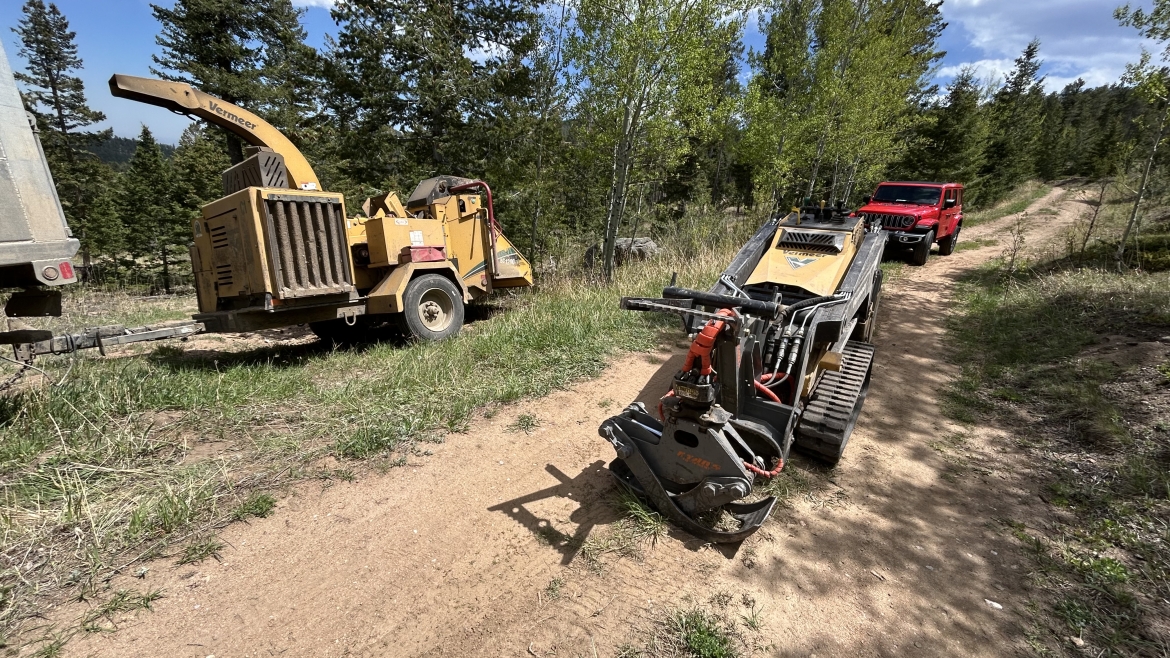
What happens if you don’t remove a dead tree depends on where the tree is located, how long it has been dead, and what is around it. A dead tree in the middle of an open field may not create the same risk as a dead tree next to a home, driveway, fence, sidewalk, or power line. But on residential properties, leaving a dead tree standing for too long can become expensive, unsafe, and stressful.
A dead tree does not stay the same. It continues to dry out. Wood strength declines. Branches become brittle. Decay can spread through the trunk and root system. Eventually, the tree may begin dropping limbs or fail completely.
For Colorado homeowners, the risk is even more important. Dead trees along the Front Range may face strong winds, heavy spring snow, dry weather, and rapid temperature changes. These conditions can turn a standing dead tree into an emergency tree removal situation with little warning.
If you have a dead tree near your home, garage, driveway, or outdoor living area, Good People Tree Service can inspect it and explain whether planned removal is the safest option.
A Dead Tree Becomes More Unstable Over Time
One of the biggest misconceptions about dead trees is that they are harmless once they stop growing. In reality, the opposite is often true.
A living tree has moisture, flexibility, and active tissue. It can respond to stress in limited ways. A dead tree loses that ability. As it dries and decays, it becomes more brittle and less predictable.
Branches may snap without much warning. The trunk may weaken from the inside. Roots may decay underground. The tree may still stand for a while, but its structure is no longer improving. It is only breaking down.
That breakdown can happen slowly or quickly depending on the species, size, condition, location, and weather exposure.
This is why waiting rarely improves the situation. A dead tree near a structure usually becomes more difficult and more dangerous to manage over time.
What Happens If You Don’t Remove a Dead Tree Near Your Home?
What happens if you don’t remove a dead tree near your home is usually a matter of risk. The longer the tree remains standing, the more likely it is to drop limbs, damage property, attract pests, or become harder to remove safely.
A dead tree near a house can threaten:
- Roofs
- Gutters
- Windows
- Siding
- Decks
- Fences
- Vehicles
- Garages
- Sheds
- Walkways
- Driveways
Even if the whole tree does not fall, one large limb can create expensive damage.
The University of Maryland Extension notes that a hollow or rotten tree can sometimes live for years because its life-supporting tissue is near the outer edges. The issue is not always whether the tree is alive, but whether trunk strength is compromised. Their guidance says that if one-third of the interior of a tree is hollow or rotten, removal is often recommended.
For dead trees, the concern is even greater. A dead tree is no longer recovering. If decay is already present, structural strength may continue to decline.
Dead Branches Can Fall First
Before a dead tree falls completely, it often starts dropping branches.
This may happen during wind. It may happen under snow load. It may also happen on a calm day after the branch has become dry and brittle.
Large dead branches are especially dangerous because they can fall from height. A limb does not need to be the size of the entire tree to cause damage.
Dead branches may affect:
- People walking underneath
- Children playing in the yard
- Pets
- Parked vehicles
- Outdoor furniture
- Roof surfaces
- Fences and gates
Colorado State University Extension advises removing dead branches larger than two inches in diameter and higher than thirty feet to reduce risk if the branch fails. That guidance is a useful reminder that deadwood becomes more serious as branch size and height increase.
If a tree is already dead, dead branch failure is not a temporary issue. It is part of the tree’s ongoing decline.
Wind and Snow Can Turn a Dead Tree Into an Emergency
Colorado weather can test dead trees quickly.
Strong winds place pressure on the trunk and canopy. Wet snow adds weight to branches. Freeze-thaw cycles can worsen cracks. Dry weather can make wood more brittle.
The Colorado State Forest Service warns homeowners to use caution with storm-damaged trees. Their guidance explains that homeowners should assess the situation first and avoid unsafe cutting when limbs are twisted, hanging, or under pressure.
That advice matters for dead trees too. A dead tree may respond unpredictably when weather adds stress.
A standing dead tree may survive calm weather for months. Then one windstorm can bring it down. If it falls across a driveway, onto a roof, or into a neighbor’s yard, the situation becomes much more complicated than a planned removal.
This is one of the clearest answers to what happens if you don’t remove a dead tree: you may lose control over when and how the tree comes down.
Removal Can Become More Difficult the Longer You Wait
Planned tree removal is usually easier than emergency removal.
When a dead tree is still standing and accessible, a crew can plan the work. They can evaluate drop zones, nearby structures, equipment access, and cleanup needs.
As the tree decays, the work can become more complex.
A dead tree may become:
- Too brittle to climb safely
- More likely to break during cutting
- Less predictable under rigging
- More dangerous near structures
- More difficult to remove after falling
This can increase labor, equipment needs, and risk.
Waiting does not usually make removal cheaper. In many cases, it can make the eventual project harder.
If a dead tree is still standing near important areas of your property, scheduling removal before it becomes unstable can help avoid emergency conditions.
Dead Trees Can Attract Insects and Pests
Dead wood naturally attracts insects and wildlife. Some of this is normal in forest environments. On residential properties, it may become a problem.
Dead trees can attract:
- Beetles
- Carpenter ants
- Termites
- Borers
- Wood-decay organisms
- Nesting insects
Not every insect found in a dead tree will damage a home. But a dead tree close to the house can create unwanted pest activity near structures.
Dead and decaying wood can also support fungi. Fungal decay may continue breaking down the trunk and roots.
The longer the dead tree stays in place, the more active that decay environment may become.
Disease Can Affect Nearby Trees
Some trees die from drought, root damage, or storm injury. Others die because of insects or disease.
If disease or certain pests contributed to the decline, leaving the dead tree in place may increase pressure on nearby trees.
Colorado State Forest Service notes that diseases and pests such as emerald ash borer, thousand cankers disease, and mountain pine beetle are concerns in Colorado communities and forests. In some cases, proper handling of diseased wood matters because pests can move through logs, firewood, or nursery stock.
This does not mean every dead tree spreads disease. But it does mean homeowners should understand why the tree died.
A dead ash, walnut, pine, or other species may require more careful evaluation depending on symptoms and local pest concerns.
Insurance May Be More Complicated If the Tree Was Neglected
Homeowners sometimes assume insurance will cover damage if a dead tree falls. That is not always guaranteed.
Coverage depends on the policy, the cause of damage, what the tree hits, and whether the tree was known to be hazardous.
GEICO explains that if a tree was clearly neglected, such as being dead, rotting, or a known hazard, insurance may deny coverage for resulting damage.
This is important for homeowners with visibly dead trees.
If a healthy tree falls unexpectedly during a covered storm event, the insurance situation may be different. But if a dead tree was left standing and later caused damage, the question of neglect may become part of the claim.
That does not mean every claim will be denied. Policies vary. But waiting can create avoidable uncertainty.
Neighbor Problems Can Start After a Dead Tree Falls
A dead tree near a property line can create neighbor disputes.
If it falls across a fence or into another yard, questions may come up quickly.
Who pays for cleanup?
Who pays for damage?
Was the tree obviously dead?
Did the owner know it was hazardous?
Was there a prior warning?
A dead tree is easier to discuss before it falls than after damage occurs.
If your tree is dead and close to a neighbor’s property, proactive removal can prevent stress, disputes, and insurance complications.
The same applies in reverse. If a neighbor has a dead tree leaning toward your property, documenting the concern politely and clearly may help if problems occur later.
A Dead Tree Can Reduce Curb Appeal and Property Value
Not every cost is related to damage.
A dead tree can make a property look neglected. This matters for curb appeal, especially if the tree is in the front yard or near the entrance.
A dead tree can affect:
- First impressions
- Landscape appearance
- Buyer concerns
- Home inspection conversations
- Perceived maintenance quality
If you plan to sell the home, a visible dead tree may become a negotiation issue. Buyers may ask for removal, request credits, or worry about future risk.
Removing the tree before listing can make the property feel safer and better maintained.
Fire Risk May Be a Concern in Some Areas
In many Colorado communities, wildfire risk is part of property management.
A single dead tree in an irrigated urban yard is not the same as multiple dead trees on a foothill property. But dead woody material can contribute to fuel load in certain settings.
Colorado State Forest Service encourages homeowners and landowners to manage vegetation and reduce wildfire risk around homes. Their defensible space guidance focuses on reducing flammable material and creating safer zones around structures.
For properties near open space, foothills, or wildland-urban interface areas, dead trees should be evaluated as part of broader fire mitigation planning.
This is especially relevant for parts of the Front Range where homes meet grasslands, foothills, or forested areas.
Wildlife Considerations Still Matter
Dead trees can provide habitat for birds, insects, and small wildlife. In natural areas, standing dead trees can be ecologically valuable.
But residential safety comes first when the tree is near a home, driveway, sidewalk, or high-use area.
If a dead tree is far from structures and not creating risk, it may be possible to leave part of it in place for habitat. That decision should be made carefully.
The location matters.
A dead tree near a roof is different from a dead snag in an open natural area.
Homeowners should balance habitat value with safety, local regulations, and property risk.
Can a Dead Tree Be Saved?
A fully dead tree cannot be brought back to life.
Sometimes homeowners confuse a stressed tree with a dead tree. A tree with partial dieback may still have living tissue and recovery potential. A tree that is completely dead does not.
Signs a tree may be dead include:
- No leaf growth during the growing season
- Brittle branches throughout the canopy
- Bark falling off in large sections
- No green tissue under the bark
- Fungal decay
- Severe trunk damage
- Complete canopy dieback
A professional inspection can help determine whether the tree is fully dead or only partially declining.
This matters because a declining tree may be managed in some cases. A dead tree near a structure usually becomes a removal issue.
When Should a Dead Tree Be Removed?
A dead tree should be removed sooner when it is close to people or property.
Priority removal is usually recommended when the tree is near:
- Homes
- Garages
- Driveways
- Sidewalks
- Streets
- Fences
- Play areas
- Decks
- Outdoor seating areas
- Utility lines
- Neighboring structures
A dead tree in a low-risk area may not be urgent. But even then, it should be monitored because decay will continue.
The more targets nearby, the more important removal becomes.
What Happens After Dead Tree Removal?
After the tree is removed, homeowners can decide what to do with the stump.
Some choose stump grinding to restore the yard and make the area easier to maintain. Others leave the stump temporarily if it is out of the way.
Stump grinding can help:
- Improve appearance
- Restore usable space
- Reduce obstacles
- Prepare for replanting
- Make mowing easier
If the tree died from pests or disease, cleanup and disposal may also matter.
A professional tree service can recommend the best approach based on the species, site, and reason the tree died.
How to Avoid This Situation in the Future
Not every dead tree can be prevented. But regular tree care can reduce risk.
Helpful steps include:
- Inspect mature trees annually
- Remove deadwood early
- Water during drought
- Protect roots during construction
- Watch for pests and disease
- Prune for structure
- Avoid topping
- Check trees after storms
- Address leaning early
- Remove hazardous trees before failure
Many serious tree problems begin slowly. Early inspection gives homeowners more options.
A tree that is declining today may not need removal yet. But ignoring it until it dies often limits choices.
Good People Tree Service helps Colorado homeowners identify declining trees, manage risk, and remove dead trees safely when removal is the right option.
Final Thoughts
What happens if you don’t remove a dead tree is not always immediate. That is what makes the risk easy to underestimate.
A dead tree may stand for a while. But it will not recover. Branches become brittle. Decay spreads. Roots weaken. Wind and snow can turn it into an emergency.
On residential properties, the biggest concern is location. A dead tree near a home, driveway, sidewalk, fence, garage, or neighbor’s property should be taken seriously.
Removing a dead tree before it fails is usually safer than waiting for storm damage, insurance questions, emergency cleanup, or property repairs.
Good People Tree Service provides professional dead tree removal, tree inspections, stump grinding, and emergency tree services throughout Colorado’s Front Range communities.
If you have a dead tree on your property, schedule an evaluation before it becomes a larger problem.