
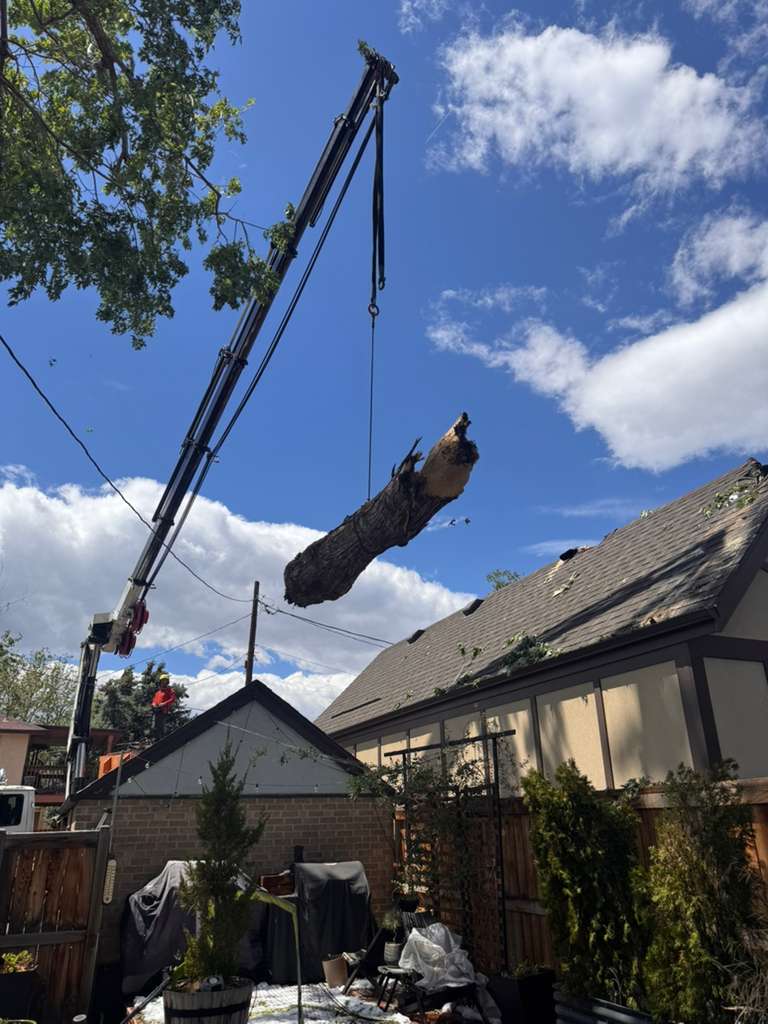
Storm damage can happen quickly in Colorado. Strong winds, heavy snow, and sudden weather changes can cause large branches or entire trees to fall without warning. In many cases, damaged trees create immediate safety risks for homes, vehicles, power lines, and walkways.
Knowing what to do after a storm can help protect your property and reduce the chance of further damage. Emergency tree situations should always be handled carefully, especially when trees are unstable or partially fallen.
Stay Away from Damaged Trees
The first priority after a storm is safety. A damaged tree may still be under tension, even if it looks stable from a distance. Cracked limbs, split trunks, and hanging branches can fall unexpectedly.
Never stand under broken limbs or attempt to move large branches yourself. Trees that are leaning or partially uprooted can shift suddenly. This is especially dangerous after high winds or heavy snow.
If the tree is touching a power line, stay far away and contact emergency services or the utility company immediately.
Check for Immediate Property Damage
Once the area is safe, inspect the property from a distance. Look for:
- Fallen limbs on roofs or vehicles
- Blocked driveways or walkways
- Split trunks or hanging branches
- Trees leaning toward structures
- Damage near fences, sheds, or utility lines
Take photos if possible. This may help with insurance documentation later.
Do Not Attempt Large Tree Removal Yourself
Many homeowners try to cut fallen branches on their own after a storm. However, emergency tree removal can be extremely dangerous without the right equipment and training.
Storm-damaged trees are often unstable. Branches may be supporting hidden weight. Cuts made in the wrong place can cause sudden movement or collapse.
Professional crews use specialized equipment and controlled removal methods to reduce risk. This is especially important in residential areas where trees are close to homes or neighboring properties.
Contact an Emergency Tree Service Company
A professional emergency tree service can evaluate the damage and determine the safest removal plan. Quick response is important when trees are blocking access or threatening structures.
Emergency crews typically help with:
- Fallen tree removal
- Broken limb removal
- Hazard stabilization
- Storm damage cleanup
- Emergency pruning
- Safe removal near structures or utility lines
In Colorado’s Front Range communities, emergency tree work is common after severe wind events and heavy spring snowstorms.
Understand Why Storm Damage Happens
Many storm-related failures are linked to existing structural problems. Weak branch unions, deadwood, poor pruning history, and drought stress can all increase the chance of failure.
Colorado trees also deal with rapid temperature changes and dry conditions. Over time, these stresses can weaken the canopy and root system.
Preventative pruning helps reduce these risks. Removing weak or overextended limbs before storm season can improve stability and lower the chance of major breakage.
Should a Storm-Damaged Tree Be Removed?
Not every damaged tree needs full removal. In some cases, corrective pruning and structural cleanup may save the tree.
However, removal may be necessary if the tree:
- Has major trunk splitting
- Is uprooted or unstable
- Has severe structural damage
- Is leaning dangerously
- Poses risk to nearby structures
A professional evaluation helps determine whether the tree can recover safely or should be removed.
Stump Grinding After Emergency Tree Removal
If a tree must be removed completely, many homeowners also choose stump grinding. This clears the remaining stump and restores usable space.
Stump grinding improves appearance and helps prepare the area for landscaping or replanting. It also prevents the stump from becoming a long-term obstacle in the yard.
Preventing Future Storm Damage
While storms cannot be avoided, proper maintenance can reduce the risk of severe tree failure.
Regular tree care may include:
- Structural pruning
- Deadwood removal
- Canopy thinning
- Health evaluations
- Monitoring for decay or weakness
Healthy trees are generally more resilient during storms. Preventative care also helps identify hazards before they become emergencies.
Professional Emergency Tree Removal in Colorado
Emergency tree situations require fast response and experienced handling. Good People Tree Service provides professional emergency tree removal throughout Colorado’s Front Range communities.
We help homeowners safely manage storm-damaged trees, hazardous limbs, and urgent cleanup situations. Our team focuses on safety, efficient removal, and protecting surrounding property.
If you need emergency tree removal after a storm, contact Good People Tree Service today for professional assistance.