
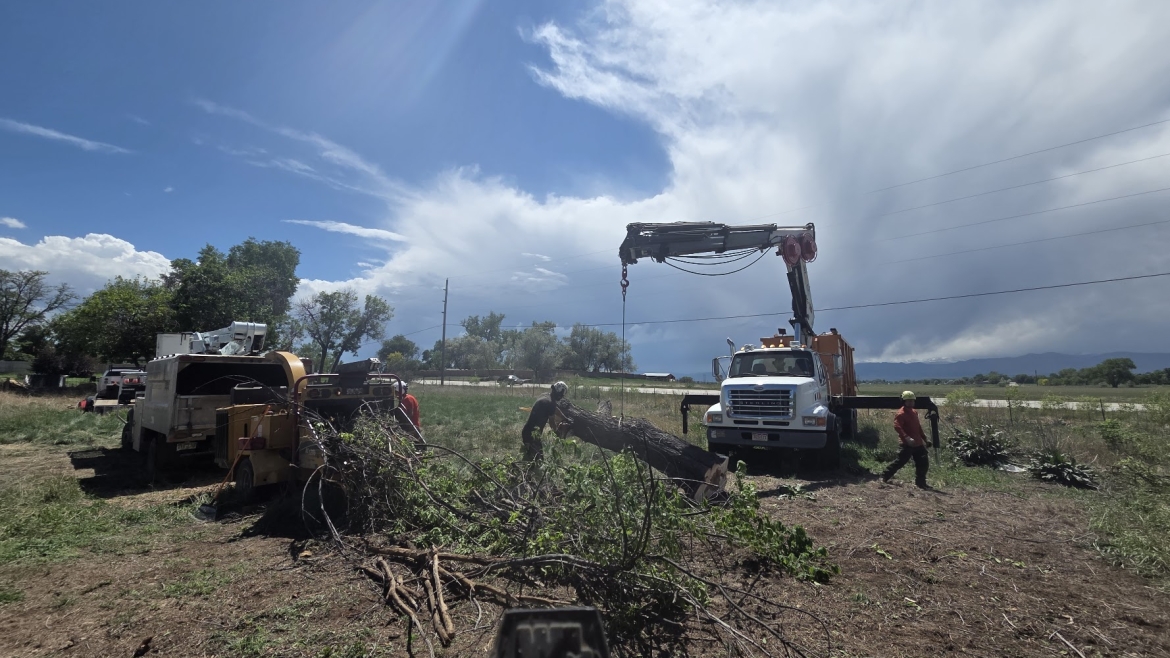
If you’ve lived in Colorado for any length of time, you’ve probably experienced a day when the wind felt strong enough to move patio furniture, rattle windows, and send branches flying across the neighborhood. While most people think about snowstorms when they think of tree damage, high winds are actually one of the most common causes of tree failures across the Front Range.
From Chinook winds along the foothills to sudden storm fronts moving across the plains, Colorado weather can place tremendous stress on trees. Understanding how wind affects trees—and knowing what warning signs to watch for—can help homeowners avoid costly property damage and unexpected emergencies.
Why Colorado Winds Are So Hard on Trees
Trees are designed to move. In fact, a healthy tree sways naturally during windy conditions. That movement helps distribute force throughout the trunk, branches, and root system.
Problems occur when the stress exceeds what the tree can handle.
In Colorado, high winds often combine with other factors that weaken trees over time, including:
- Drought stress
- Heavy snow damage
- Root problems
- Internal decay
- Previous storm injuries
- Improper pruning
The result is a tree that may appear healthy from the outside but is much more vulnerable than it seems.
Wind Damage Doesn’t Always Mean a Fallen Tree
Many homeowners assume that if a tree is still standing after a storm, everything is fine.
Unfortunately, wind damage is not always immediately obvious.
Some of the most serious problems develop quietly after the storm passes.
Common examples include:
- Cracked limbs
- Split branch unions
- Hidden trunk fractures
- Root movement
- Canopy imbalance
These issues may not cause immediate failure. Instead, they weaken the tree and increase the likelihood of future problems during the next major weather event.
Watch for Trees That Suddenly Begin Leaning
A tree that develops a new lean after high winds deserves attention.
While some trees naturally grow at an angle, a noticeable change following a storm may indicate root instability.
Signs of root failure include:
- Soil lifting near the base
- Exposed roots
- Cracked ground around the trunk
- Fresh movement in the root zone
Once a root system begins to fail, the entire tree becomes less predictable.
In some cases, failure happens immediately. In others, it may take days or even weeks before the tree comes down.
Broken Branches Can Be More Dangerous Than They Look
One of the most common forms of wind damage involves large limbs.
A branch may crack without falling completely. These partially attached limbs are sometimes called “hangers” because they remain suspended in the canopy.
They can be extremely dangerous.
A hanging branch may stay in place for hours, days, or even weeks before finally breaking loose.
Homeowners should avoid standing beneath damaged limbs or attempting to remove them without proper equipment.
Large Trees Near Homes Require Special Attention
A damaged tree located in the middle of an open field presents a different level of risk than one growing next to a house.
After a major wind event, pay close attention to trees located near:
- Roofs
- Garages
- Driveways
- Fences
- Outdoor living spaces
- Utility lines
Even minor structural damage can become more serious when a tree is positioned close to valuable property.
Not All Wind-Damaged Trees Need Removal
Many homeowners assume wind damage automatically means the tree must come down.
In reality, numerous trees recover successfully after storms.
Whether a tree can be saved depends on factors such as:
- The amount of canopy loss
- Root stability
- Trunk condition
- Species characteristics
- Overall health
Sometimes corrective pruning is enough to restore balance and reduce future risk.
Other times, removal becomes the safest option.
How Preventative Pruning Helps
One of the best defenses against wind damage is proactive tree maintenance.
Trees with poor branch structure are more likely to fail during strong winds. Overextended limbs, dense canopies, and weak branch attachments all increase stress.
Strategic pruning helps:
- Reduce excess canopy weight
- Improve airflow
- Remove deadwood
- Strengthen structure
- Minimize storm-related failures
Many emergency tree situations begin with problems that could have been identified years earlier.
Colorado Species React Differently to Wind
Not all trees respond to wind the same way.
Some species are naturally more resilient, while others are prone to branch breakage or structural failure under heavy stress.
Factors such as age, root development, previous pruning history, and growing conditions often matter just as much as species selection.
This is why professional evaluations are valuable after major wind events.
What to Do After a Windstorm
If your property experiences high winds, it’s worth taking a few minutes to inspect your trees afterward.
Look for:
- New leaning
- Broken branches
- Cracks in the trunk
- Canopy imbalance
- Exposed roots
- Hanging limbs
Document any concerns with photos and avoid attempting major tree work yourself.
If something appears unsafe, contact a professional tree service for an evaluation.
When Emergency Tree Service Is Needed
Emergency response may be necessary if a tree:
- Falls onto a structure
- Blocks access routes
- Contacts utility lines
- Develops severe leaning
- Loses major structural limbs
- Creates immediate safety hazards
Quick professional action can help prevent additional damage and restore safety.
Professional Storm Damage Tree Services in Colorado
High winds are a normal part of life in Colorado, but significant tree damage should never be ignored. What appears to be a minor issue today can become a much larger problem during the next storm.
Good People Tree Service provides professional tree inspections, storm damage assessments, pruning, emergency tree removal, and ongoing tree care throughout Colorado’s Front Range communities.
If your trees have been affected by recent high winds, contact Good People Tree Service today to schedule an evaluation.