Living in the Peak to Peak region means winter weather is just a part of life. Heavy snowfall, rapid temperature swings, and strong winds all come with the territory. But when snow starts piling up on your trees, it can quickly turn from a scenic winter view into a serious safety concern.
After a storm, many homeowners notice branches bending lower than usual or entire trees looking weighed down. The big question we hear at Good People Tree Service is simple: Is this normal winter stress, or is my tree about to fail?
If you live in areas like Nederland, Lyons, Black Hawk, Jamestown, or nearby mountain communities, here’s what you should know about snow-loaded trees, what you can do right away, and when it’s time to call for emergency tree services.
Why Heavy Snow Puts Trees at Risk
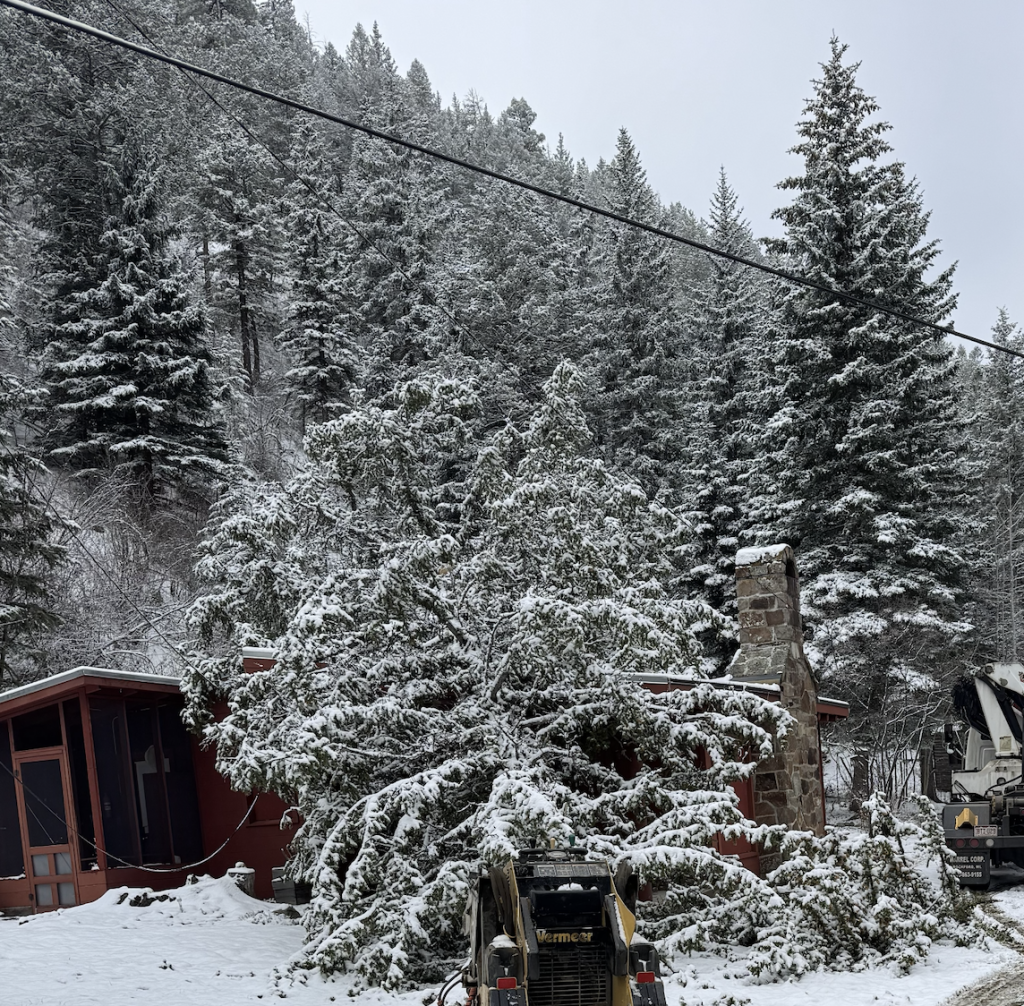
Not all snow is created equal. In the mountains, snow is often dense and wet, especially during storms that hover around freezing. That wet snow sticks to branches and needles, adding hundreds, or even thousands, of pounds of extra weight.
Evergreen trees such as pine, spruce, and fir are especially vulnerable because snow collects on their needles rather than falling through. Deciduous trees can also be affected if they still have dead limbs or weak branch structures.
Trees that are already stressed are at even higher risk. Beetle-killed trees, drought-stressed trees, or trees growing in shallow, rocky soil common to the Peak to Peak region are far more likely to crack, split, or uproot under heavy snow loads.
What to Do Right After a Heavy Snowfall
After a storm, start with a cautious visual inspection from the ground. You don’t need to walk your entire property immediately and you should never stand under snow-loaded branches.
Look for obvious changes. Are branches sagging much lower than usual? Is the tree leaning toward your home, driveway, or road? Do you see snow packed tightly into branch unions where limbs meet the trunk?
If branches are simply bent and intact, the safest option is often to let nature do its thing. As temperatures rise or the snow dries out, much of the weight may fall away on its own. Trying to shake branches, hit them with tools, or climb a ladder can cause sudden breakage and serious injury.
What matters most is watching for movement or damage that worsens over time. Snow damage often escalates hours, or even days, after the storm has passed.
Warning Signs You Shouldn’t Ignore
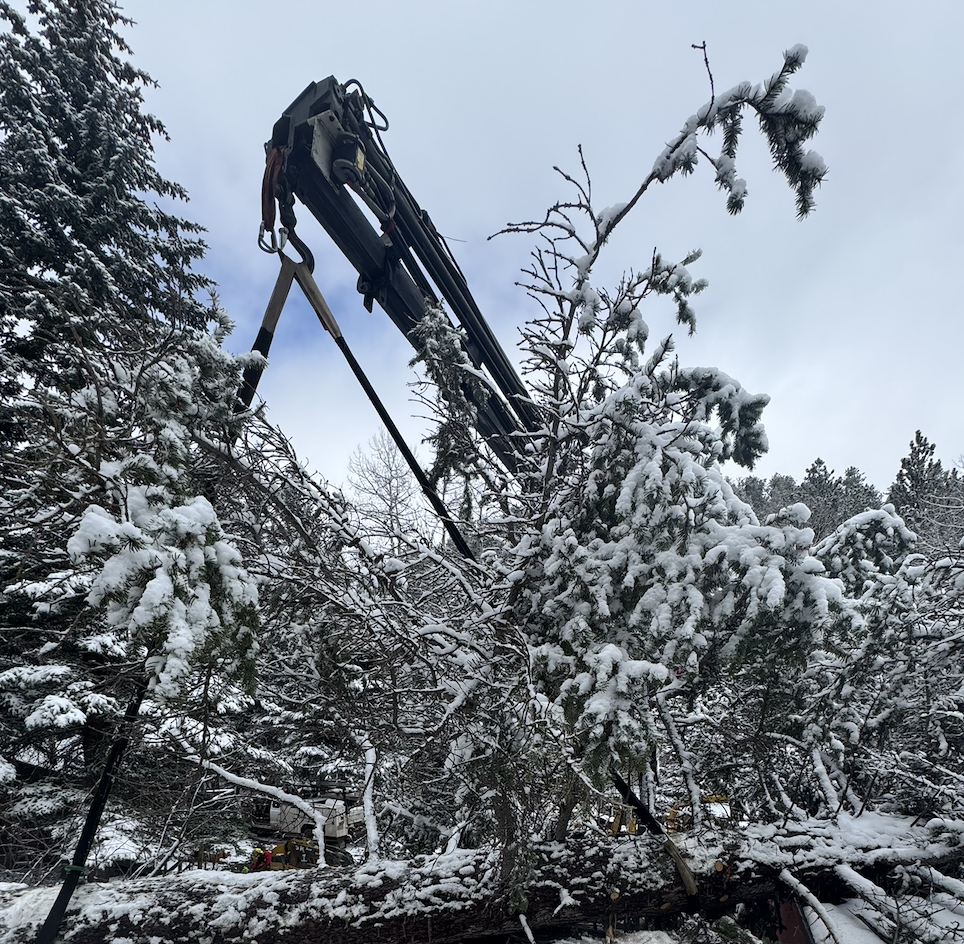
Heavy snow becomes dangerous when it pushes a tree beyond what it can safely support. One of the biggest red flags is cracking or popping sounds coming from the tree. These noises often mean fibers are tearing under stress, and failure could happen at any moment.
Another major concern is a tree that begins leaning after a storm. A sudden lean can indicate root movement, especially when snowmelt combines with frozen or saturated soil. If you notice lifted soil, exposed roots, or widening gaps at the base of the tree, that’s a sign the tree may be losing stability.
Large broken limbs are also a serious issue. Even if a branch hasn’t fallen yet, a partially broken limb hanging over a structure, vehicle, or walkway should be treated as an emergency. Snow-loaded branches can drop without warning, even on calm days.
When Snow Damage Is an Emergency
Snow-related tree damage becomes an emergency when there is an immediate risk to people, property, or access. If a tree or limb is threatening your house, garage, power lines, or blocking your driveway or road, it’s time to call a professional right away.
Emergency situations also include trees that have split trunks, multiple major limb failures, or severe lean toward occupied areas. In mountain communities, blocked access can be especially dangerous during winter, making fast response critical.
Why DIY Tree Work Is Especially Risky in Winter
Winter tree work is one of the most dangerous times to attempt DIY removal. Snow hides weak points, ice reduces traction, and branches can behave unpredictably when cut under load.
Even experienced homeowners are often surprised by how quickly a snow-damaged tree can shift or fall once work begins. Professional emergency tree crews use specialized equipment and techniques designed for winter conditions and steep mountain terrain.
How Good People Tree Service Helps During Winter Emergencies
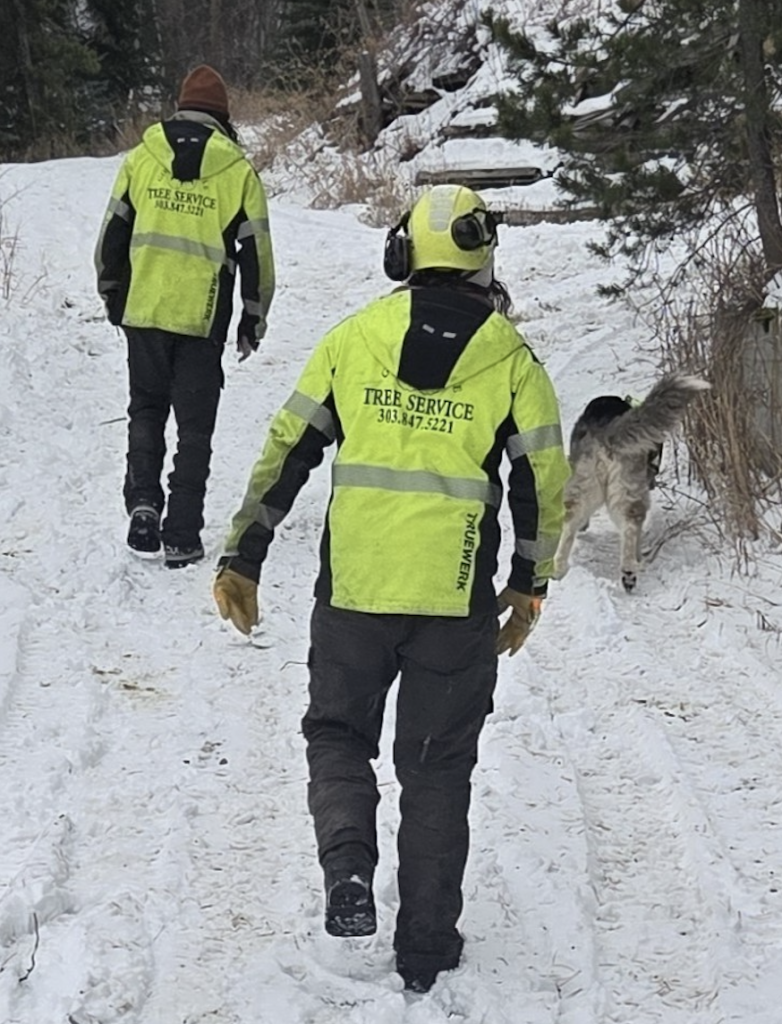
At Good People Tree Service, we specialize in emergency tree services throughout the Peak to Peak region. We understand how winter storms impact mountain trees and how quickly snow damage can turn into a serious hazard.
Our team responds to snow-related emergencies with safety-first evaluations, clear communication, and efficient tree removal or mitigation. Whether it’s a snow-loaded pine threatening your roof or a fallen tree blocking access to your property, we’re equipped to handle it.
We proudly serve Nederland, Lyons, Black Hawk, Jamestown, and surrounding mountain communities with reliable, local tree care you can trust.
When in Doubt, Get It Checked
If something about a snow-loaded tree doesn’t look or feel right, trust your instincts. It’s always better to address a potential hazard early than to wait for damage to occur.If heavy snow is weighing down your trees and you’re concerned about safety, contact Good People Tree Service today for emergency tree service or a professional assessment. We’re here to help protect your property all winter long.