
Many homeowners wait because they are unsure whether a tree is truly dangerous. Others hope the problem will improve on its own. Sometimes the tree still has green leaves, so the risk feels less urgent. But tree health and tree stability are not always the same thing.
A declining tree can stand for years before it fails. During that time, decay may spread, roots may weaken, branches may die back, and the cost of dealing with the problem may rise.
For Colorado homeowners, this matters even more. Trees along the Front Range face heavy spring snow, strong winds, drought stress, and sudden temperature changes. These conditions can turn a weak tree into an urgent hazard quickly.
If you are unsure whether a tree should be removed, Good People Tree Service can inspect it and help you understand whether pruning, monitoring, or removal is the safest choice.
Why Homeowners Delay Tree Removal
Most homeowners do not ignore risky trees on purpose. They delay because the decision is not always simple.
A tree may still provide shade. It may have sentimental value. It may be expensive to remove. It may only look unhealthy from one side. Or it may not seem dangerous until a storm arrives.
Common reasons homeowners wait include:
- The tree still has leaves
- The damage looks minor
- Removal feels too expensive
- The tree is not close to the house
- They hope pruning will solve the issue
- They are unsure who to call
- They do not know whether insurance will help
- They underestimate Colorado storm risk
These reasons are understandable. But waiting can reduce options.
A tree that could have been removed safely under normal conditions may become unstable later. Once that happens, removal often becomes more complicated.
The Hidden Cost of Delaying Tree Removal
The hidden cost of delaying tree removal usually appears in stages. First, the tree becomes harder to manage. Then it becomes more dangerous. Finally, it may fail during weather that exposes existing weakness.
The cost is not only the removal price. It may include damage to roofs, fences, vehicles, landscaping, driveways, utilities, and nearby trees.
It may also include time. Emergency situations require fast decisions. Homeowners may need to coordinate with insurance, repair companies, neighbors, and tree crews at the same time.
A planned tree removal is usually more controlled. The crew can assess access, equipment needs, drop zones, nearby structures, and cleanup. Emergency removal is different. The tree may already be tangled in a roof, leaning over a garage, or blocking a driveway.
That difference can change the entire project.
Planned Removal Is Usually Easier Than Emergency Removal
A planned removal gives everyone more control.
The tree crew can inspect the site in daylight. Equipment can be scheduled properly. Obstacles can be moved. Nearby vehicles can be relocated. The work area can be prepared.
Emergency removal often happens under less ideal conditions.
A storm-damaged tree may be cracked, leaning, or partially supported by another structure. Large limbs may be under tension. The root system may have shifted. The ground may be wet, icy, or unstable.
Colorado State Forest Service warns homeowners to be careful after snow damage. Their guidance explains that the first impulse may be to start cutting, but homeowners should assess the situation first to avoid injury or further damage to the tree. This advice is especially important when limbs are twisted, hanging, or under pressure.
When removal becomes an emergency, safety becomes more complex. That can increase labor, equipment needs, and overall cost.
Storms Can Turn a Weak Tree Into a Major Problem
Colorado weather can test trees quickly.
The National Weather Service reported wind gusts from 70 to 100 mph near the base of the foothills during the December 30, 2021 Front Range wind event. The affected area included Boulder and the Highway 93 corridor toward Golden.
Another National Weather Service report noted that wind gusts in the foothills exceeded 100 mph during a Christmas Day wind event, with several reports between 70 and 90 mph. Parts of the western Denver metro area also saw gusts from 60 to 80 mph.
Those numbers matter for homeowners. A tree with decay, weak roots, dead limbs, or poor structure may survive normal weather. But extreme wind can expose hidden problems.
Even smaller storm events can create risk. The National Weather Service reported that high winds in May 2024 produced tree damage in parts of metro Denver, with a 75 mph gust recorded at Centennial Airport.
A tree does not need to be fully dead to fail. It only needs to be weak enough for the next storm to finish the job.
If a tree has started leaning, dropping large limbs, or showing signs of decay, it is better to evaluate it before severe weather arrives.
Property Damage Can Cost More Than Removal
One of the biggest risks of waiting is property damage.
A failing tree can damage:
- Roofs
- Gutters
- Siding
- Windows
- Fences
- Vehicles
- Garages
- Sheds
- Decks
- Landscaping
- Driveways
- Utility lines
Even a single large limb can create expensive repairs.
A planned removal may feel costly. But it is often smaller than the combined cost of emergency removal plus repairs.
There is also the inconvenience. A tree that falls across a driveway can block access. A tree that lands on a roof may require temporary repairs. A tree that damages a fence may create security or pet-safety issues. A tree that hits a vehicle can lead to a separate insurance claim.
The real cost is not only financial. It is the disruption that follows.
Insurance May Not Cover Everything
Homeowners sometimes assume insurance will solve the problem if a tree falls. That is not always true.
Insurance coverage depends on the policy, the cause of the damage, and what the tree hits.
The Insurance Information Institute explains that standard homeowners policies may cover damage to trees and shrubs from certain disasters or accidents, such as fire, lightning, explosion, theft, vandalism, and vehicles not owned by the resident. Coverage is limited and depends on the policy.
Allstate also notes that homeowners insurance may cover tree damage if a healthy tree falls because of a covered peril like wind. However, policies may not cover damage caused by neglected or rotting trees.
This is important. If a tree was visibly dead, decaying, or neglected, insurance questions may become more complicated.
There may also be limits on debris removal. If a fallen tree does not damage a covered structure, cleanup may not be covered in the way homeowners expect.
This is one reason delaying removal can be risky. A known hazard may not be treated the same way as a healthy tree that falls unexpectedly during a storm.
Neighbor Disputes Can Become Part of the Cost
Trees do not always fall neatly within property lines.
A declining tree near a fence can create tension between neighbors. If it falls, the situation may involve cleanup, damage, insurance questions, and responsibility concerns.
Even when insurance handles part of the issue, the process can be stressful.
Questions often include:
- Whose tree was it?
- Was it visibly dangerous?
- Did the owner know about the problem?
- Did it fall because of a storm?
- Which property was damaged?
- Who pays for cleanup?
- Was there prior documentation?
These disputes are easier to avoid before the tree fails.
If a tree is clearly hazardous, removing it early can prevent damage and protect neighbor relationships.
Delaying Can Make the Tree More Dangerous to Remove
A declining tree does not stay in the same condition forever.
Dead trees become more brittle over time. Decay can spread. Root systems can weaken. Branches can lose flexibility. Trunks can become less predictable.
This affects removal.
A tree that is still structurally stable can often be removed with a more straightforward plan. A tree that has become brittle, hollow, or unstable may require more careful rigging and additional safety steps.
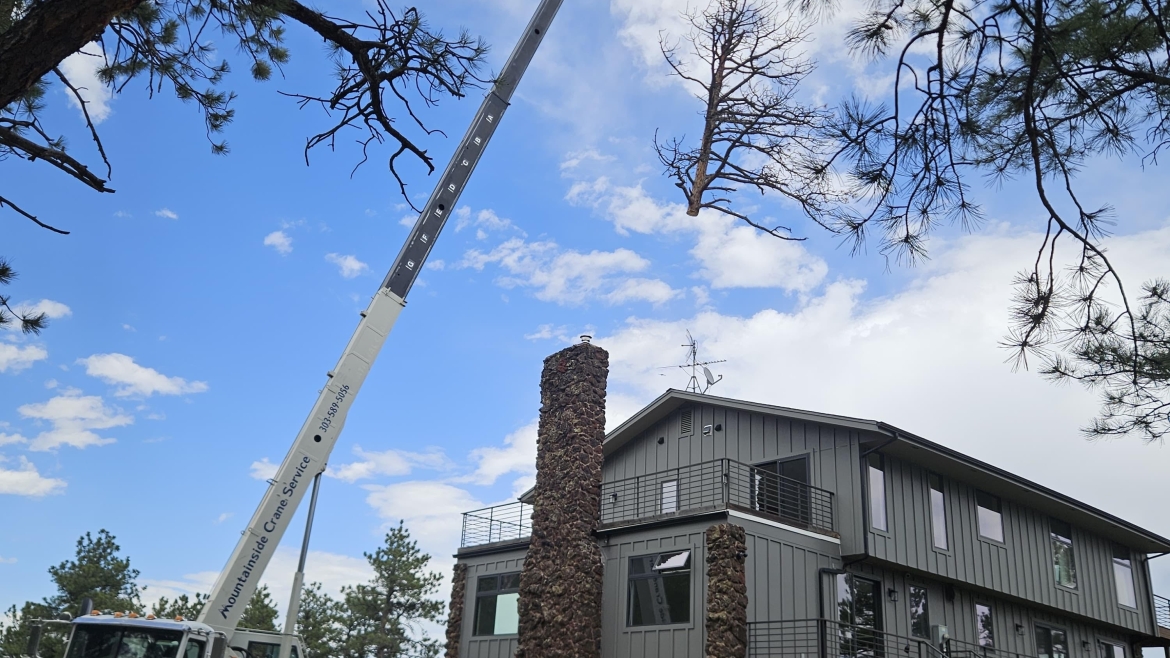
In some cases, equipment access becomes more important because the tree can no longer be climbed safely.
That can change the scope of the work.
Waiting may not just increase risk to the property. It may also make the eventual removal more complicated.
Small Warning Signs Can Point to Bigger Problems
Many serious tree failures begin with subtle signs.
Homeowners should pay attention to:
- Large dead branches
- Cracks in the trunk
- Fungal growth near the base
- Bark loss
- Hollow sections
- A new or increasing lean
- Soil lifting around roots
- Repeated limb drop
- Canopy thinning
- Dead upper branches
- Storm damage that never healed
- Branches hanging over structures
These signs do not always mean immediate removal is required. But they do mean the tree should be evaluated.
The ISA Basic Tree Risk Assessment materials include indicators such as root damage, decay, fungal structures, cavities, cracks, dead branches, and weak unions when evaluating tree risk.
That shows how many risk factors are not obvious to the average homeowner. A tree may look mostly normal while several structural concerns are present.
Delaying Removal Can Harm Nearby Trees
A hazardous tree does not only threaten buildings.
It can also affect other trees.
A declining tree may spread certain pests or diseases. It may drop large limbs into nearby canopies. It may crowd healthier trees. If it falls, it can damage neighboring trunks and branches.
In some cases, removing one declining tree can improve conditions for the rest of the landscape. More light, better airflow, and reduced competition may help nearby trees grow more safely.
This does not mean every struggling tree should be removed. Some trees can recover with proper care. But when a tree is beyond saving, delaying removal may create problems for the surrounding landscape.
The Emotional Cost of Waiting
Tree removal is not only practical. It can also be emotional. That is another aspect of the hidden cost of delaying tree removal.
Homeowners may delay because the tree has been part of the property for years. It may shade the patio. It may frame the house. It may have been planted by a previous owner or family member.
That attachment is real.
But a tree can be valuable and still become unsafe. Waiting until it fails can make the situation more painful. Instead of choosing a controlled removal and possible replacement plan, homeowners may be forced into emergency cleanup after damage occurs.
A proactive approach allows for better planning. The homeowner can consider replacement planting, landscape changes, stump grinding, and timing.
That is a very different experience from waking up to a tree on the roof or across the driveway.
When Pruning May Be Enough
Delaying tree removal is risky when a tree is structurally unsafe. But not every concerning tree needs to come down.
Sometimes pruning is the better option.
Pruning may help when:
- Deadwood is limited
- The tree is structurally stable
- One limb is creating risk
- Canopy weight needs reduction
- Branch clearance is the main concern
- Storm damage is moderate
- The tree has strong recovery potential
A professional evaluation can help determine whether pruning can reduce risk enough.
This is important because the goal is not to remove every imperfect tree. The goal is to make the safest and most practical decision for the property.
When Removal Becomes the Better Choice
Removal may be the better choice when the tree has serious structural issues or is unlikely to recover safely.
This may include:
- Severe trunk decay
- Root failure
- Large cracks
- Major lean toward a target
- Repeated large limb failure
- Extensive canopy dieback
- Serious pest or disease damage
- A dead tree near structures
- Storm damage that compromises stability
In these cases, waiting often increases risk.
A tree near a house, garage, sidewalk, or driveway deserves special attention. The closer the tree is to people or property, the more important risk evaluation becomes.
Good People Tree Service can inspect the tree and explain whether removal, pruning, or monitoring is the right next step.
The Cost of Waiting Before Selling a Home
Tree issues can also affect real estate decisions.
A visibly dead or hazardous tree may raise concerns during showings, inspections, or negotiations. Buyers may worry about future removal costs or property damage.
A tree leaning toward the house or dropping large limbs can make a property feel poorly maintained. It may also become a negotiation point if the buyer requests repairs or credits.
Handling the issue before listing can make the property feel safer and better cared for.
This is especially true when curb appeal matters. A declining tree in the front yard can shape a buyer’s first impression before they ever enter the home.
Why a Professional Evaluation Saves Money
A tree evaluation does not automatically mean removal.
In many cases, it helps homeowners avoid guessing.
A professional can look at:
- Tree species
- Canopy condition
- Deadwood
- Trunk defects
- Root stability
- Nearby targets
- Storm exposure
- Access for removal
- Whether pruning is realistic
- Whether monitoring is appropriate
This helps homeowners make decisions based on risk instead of fear.
Sometimes the answer is simple maintenance. Sometimes the tree should be watched. Sometimes removal should happen soon.
The value is clarity.
Final Thoughts
The hidden cost of delaying tree removal is not only the price of the tree work. It is the risk that grows while the tree continues to decline.
Waiting can lead to emergency removal, property damage, insurance complications, neighbor disputes, harder cleanup, and fewer options.
Colorado weather adds urgency. High winds, heavy snow, and drought stress can expose tree weaknesses quickly. A tree that seems manageable today may become hazardous during the next storm.
The best time to make a decision is before the tree fails.
Good People Tree Service helps Colorado homeowners evaluate risky trees, prevent avoidable storm damage, and safely remove trees when removal is the right choice.
If you are concerned about a tree on your property, schedule a professional evaluation before the hidden costs become real.