If you live in Colorado’s Front Range or nearby mountain communities—from Nederland and Black Hawk to Evergreen and Estes Park—you know how much trees contribute to the beauty and character of your property. They provide shade in summer, brilliant colors in the fall, and a sense of privacy year-round. But sometimes, a tree becomes more than just a pretty feature when it starts to die, lean, or simply needs some TLC from a professional tree company.
Homeowners often ask us, ‘Should I trim this tree, or should I remove it completely?’ While the decision isn’t always straightforward, understanding the differences between trimming and removal can help you make the best choice for your home, your safety, and your wallet.
Understanding Tree Trimming
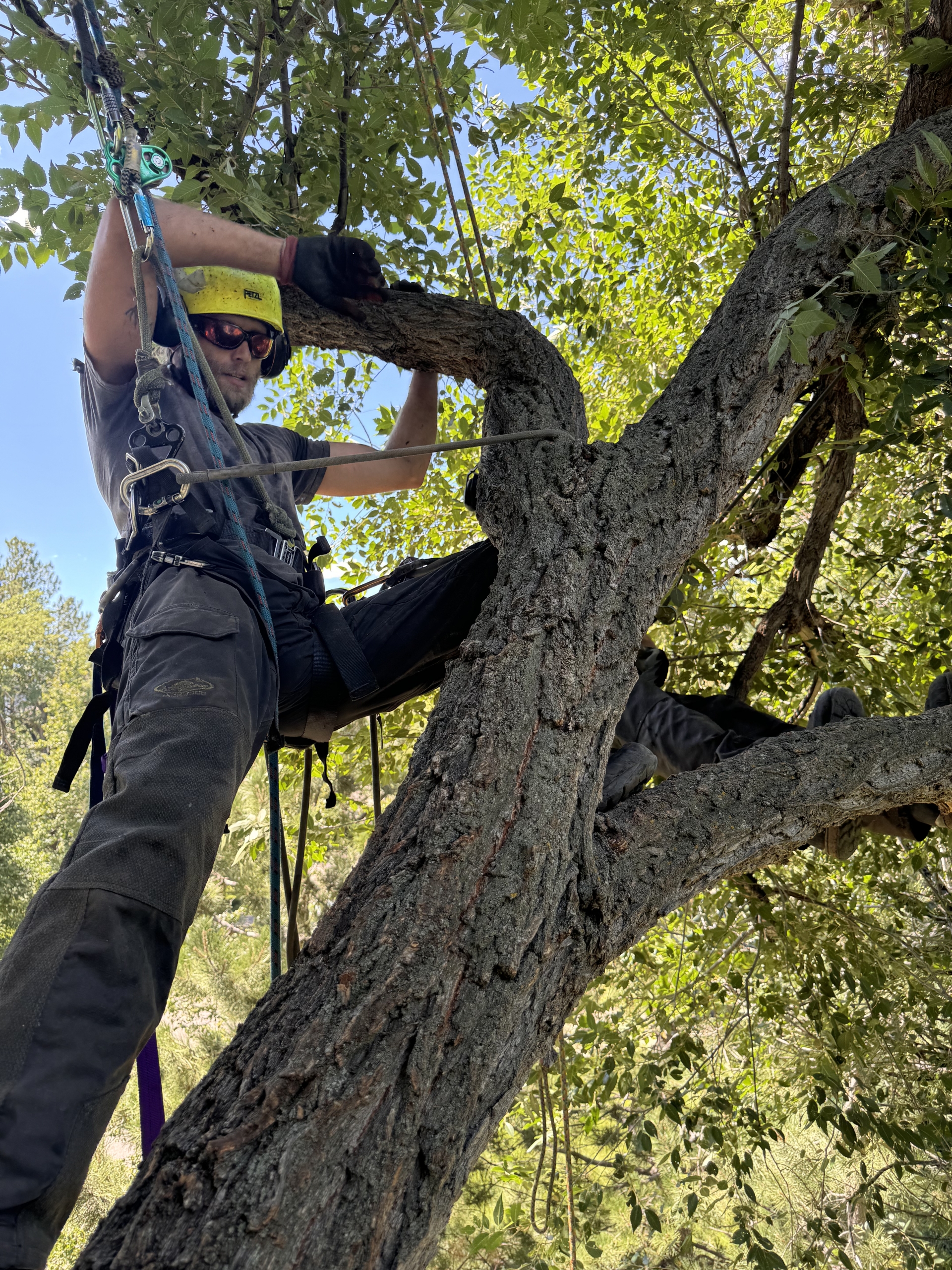
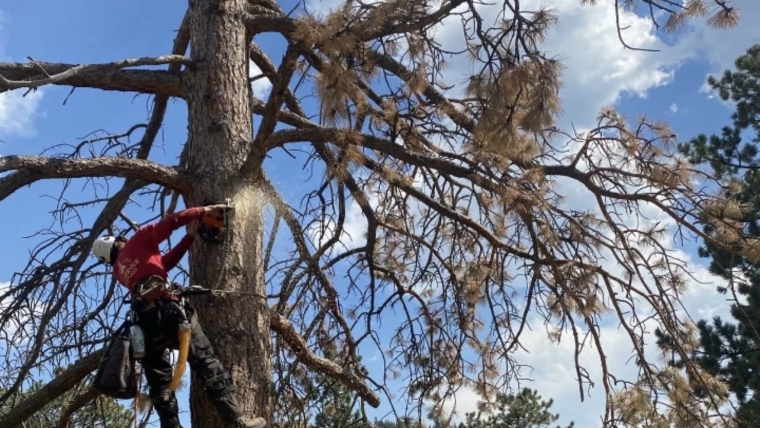
Tree trimming, sometimes referred to as tree pruning, is essentially routine maintenance for your trees. It focuses on removing smaller branches that are typically dead, diseased, or growing in an awkward direction so the tree can thrive. A properly trimmed tree looks healthier, grows stronger, and is less likely to develop problems like fungus or limb breakage during heavy snow or wind. Additionally, proper trimming can extend a tree’s life by 15–20 years and reduce storm‑related failures.
Across Colorado’s Front Range and mountain communities, trimming is especially important because seasonal conditions can be tough on trees. Heavy snow loads in winter and sudden summer storms can break weak limbs, while dense branches can trap moisture and invite disease. By shaping the tree and improving airflow, trimming not only enhances curb appeal but can also extend a tree’s lifespan for many years.
When Tree Removal Becomes Necessary
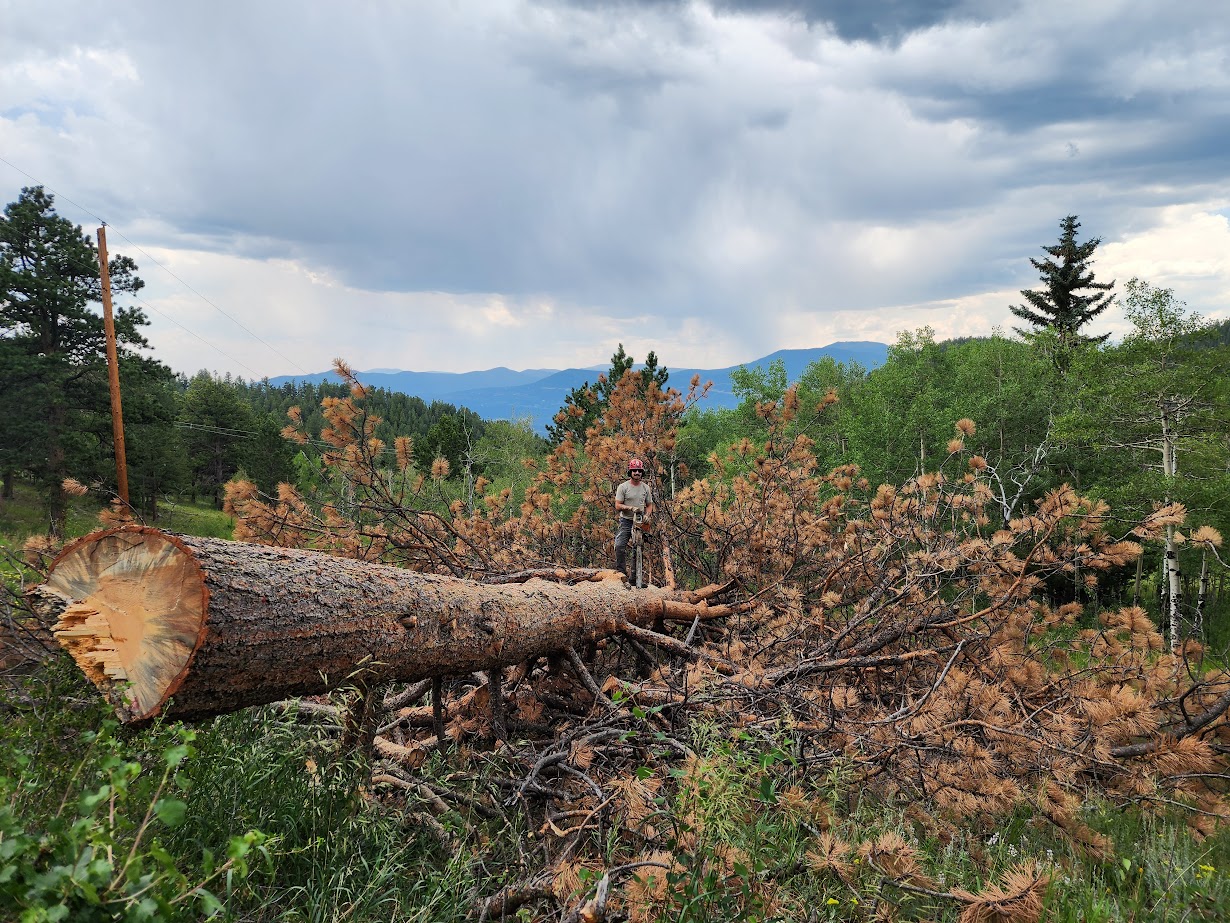
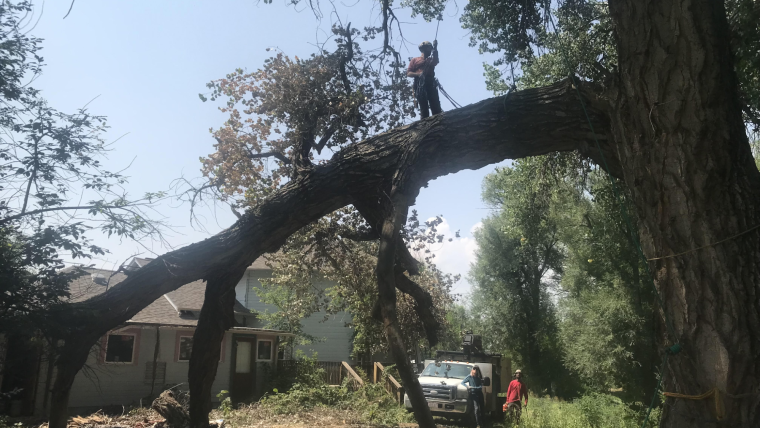
Tree removal is a much bigger step and is only recommended when a tree is no longer safe or suitable for your property. A dead or rotting tree is the most obvious candidate for removal, as are trees that lean dangerously toward your home, garage, or power lines. Sometimes the signs are less obvious: internal decay, cavities in the trunk, or roots that are undermining your driveway or foundation. Generally, tree removal is warranted if 25–40 % of the canopy is dead or dying, or if trunk damage exceeds 40 % circumference.
In Colorado’s Front Range and surrounding mountain communities, we often see trees become unstable after freeze-thaw cycles or following intense windstorms. Even a healthy-looking tree can be at risk if its roots are compromised. In these situations, trimming alone won’t solve the problem. Removing the tree is the safest option to protect your property and your family.
How to Decide Between Trimming and Removal
The choice often comes down to safety, long-term health, and cost. If your tree is generally healthy and only has a few problem branches, trimming is usually all you need. However, if the tree shows significant decay, has large dead sections, or is structurally unstable, removal is often the more responsible decision.
Homeowners are sometimes tempted to “wait and see,” but in areas with steep slopes and frequent storms, waiting can lead to costly property damage. Consulting with a certified arborist can give you peace of mind—and often save money in the long run by addressing issues before they escalate.
| Scenario | Tree Trimming | Tree Removal |
| Small dead branches | X | |
| Overgrown but healthy tree | X | |
| Weak branch structure, cavities, or fungus risk | X | |
| Leaning near home or driveway | X | |
| Roots damaging foundation or sidewalk | X | |
| Blocking small light posts | X |
Considering Local Rules
It’s important to remember that some local jurisdictions require permits for tree removal, especially for certain species or trees located within designated areas. Trimming, on the other hand, usually doesn’t require permits. At Good People Tree Service, we stay up to date on local regulations so our customers can focus on their property without worrying about the paperwork. We work with several local businesses and entities, and are very familiar with the area.
Why Professional Help Matters
Both tree trimming and tree removal can be dangerous jobs, particularly in Colorado’s mountainous terrain. Professional arborists have the tools and experience to work safely, avoid damaging your landscape, and make sure your trees get the care they need. Attempting DIY removal can be risky and often ends up costing more if mistakes are made. Professional tree services are required to carry insurance that will cover us if unforeseen damages incur.
Your Next Step
If you’re unsure whether a tree on your property should be trimmed or removed, the best decision is to get a professional assessment. At Good People Tree Service, our certified arborists can evaluate the health of your trees, identify hidden risks, and recommend the safest and most cost-effective solution.Contact us today to schedule your free tree risk assessment and protect your home while keeping your landscape beautiful. Serving Boulder, Denver, Nederland, Black Hawk, Estes Park, Evergreen, and communities throughout Colorado’s Front Range and mountain areas, we’re here to help your property stay safe and stunning all year round.